A Tamil wedding begins long before the muhurtham. By dawn the kolam is drawn at the gate, plantain trees are tied at the entrance, and the smell of jasmine and camphor fills the hall. What follows is less a single ceremony than a string of small rituals, each with its own meaning — and each a chance for two families to become one.
The welcome
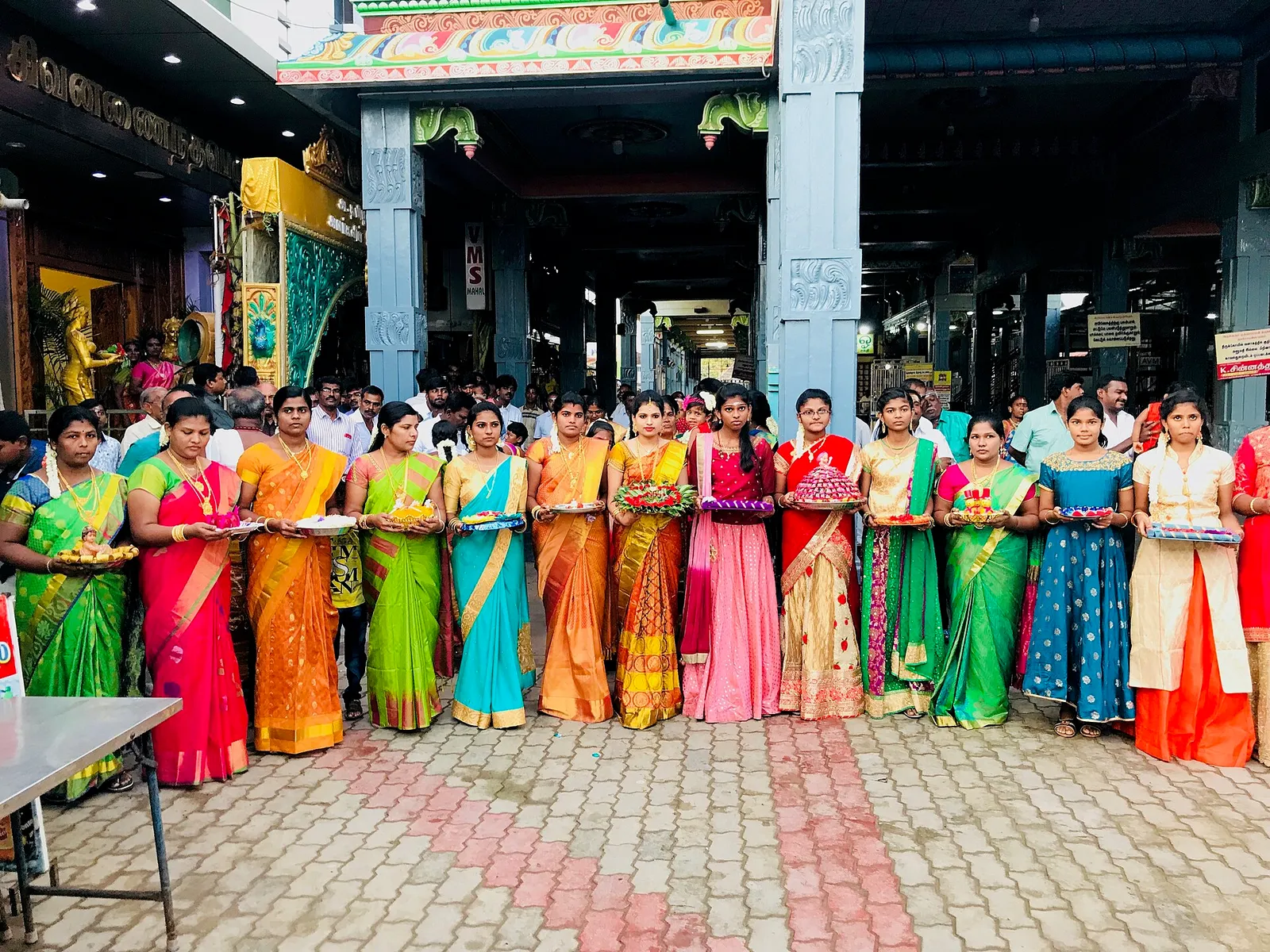
When the groom’s party arrives, the women of the bride’s family receive them with trays of fruit, flowers and lamps. Aarti is performed to ward off the evil eye, and rose water and sandal paste are offered at the door.
Paada pooja
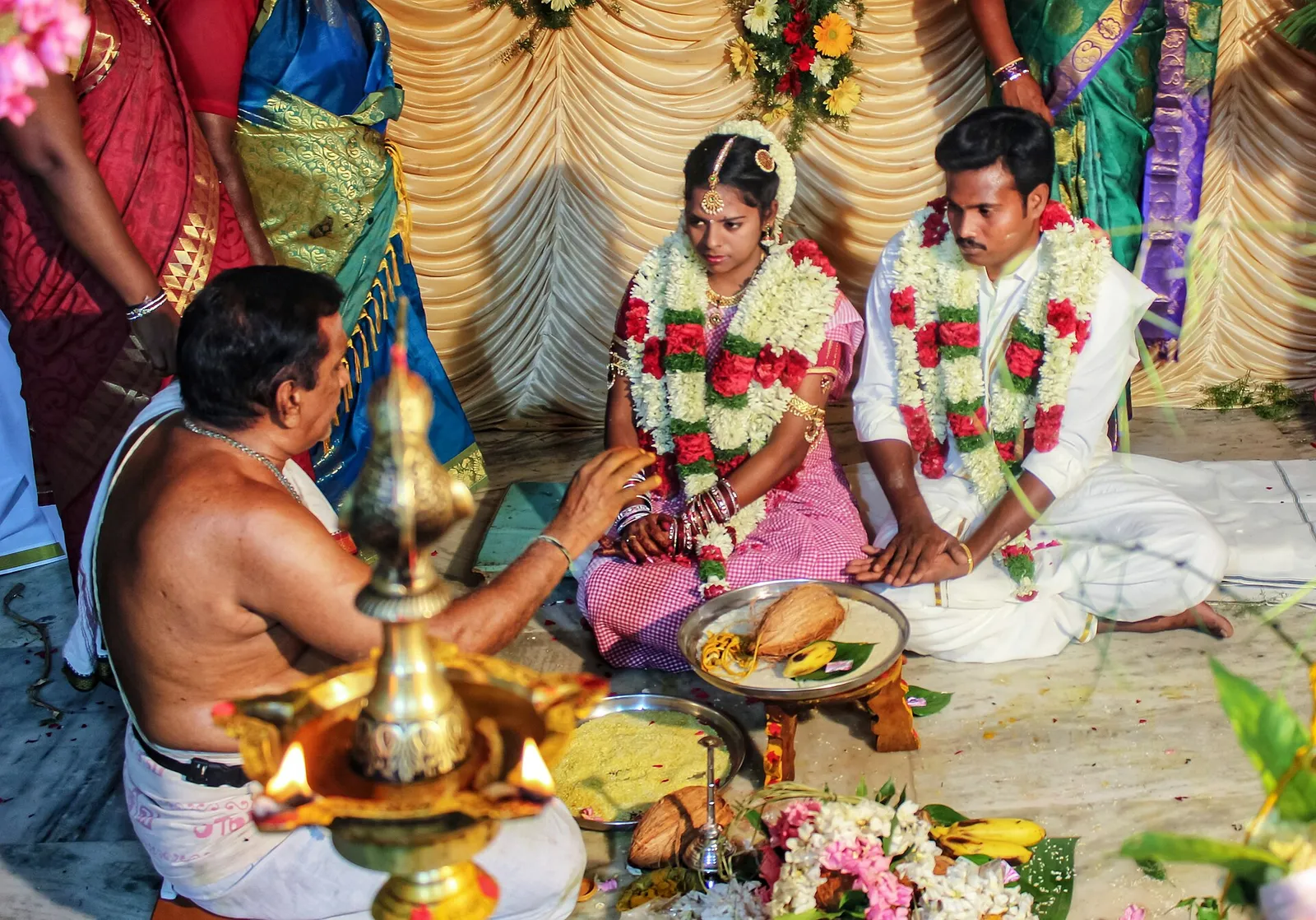
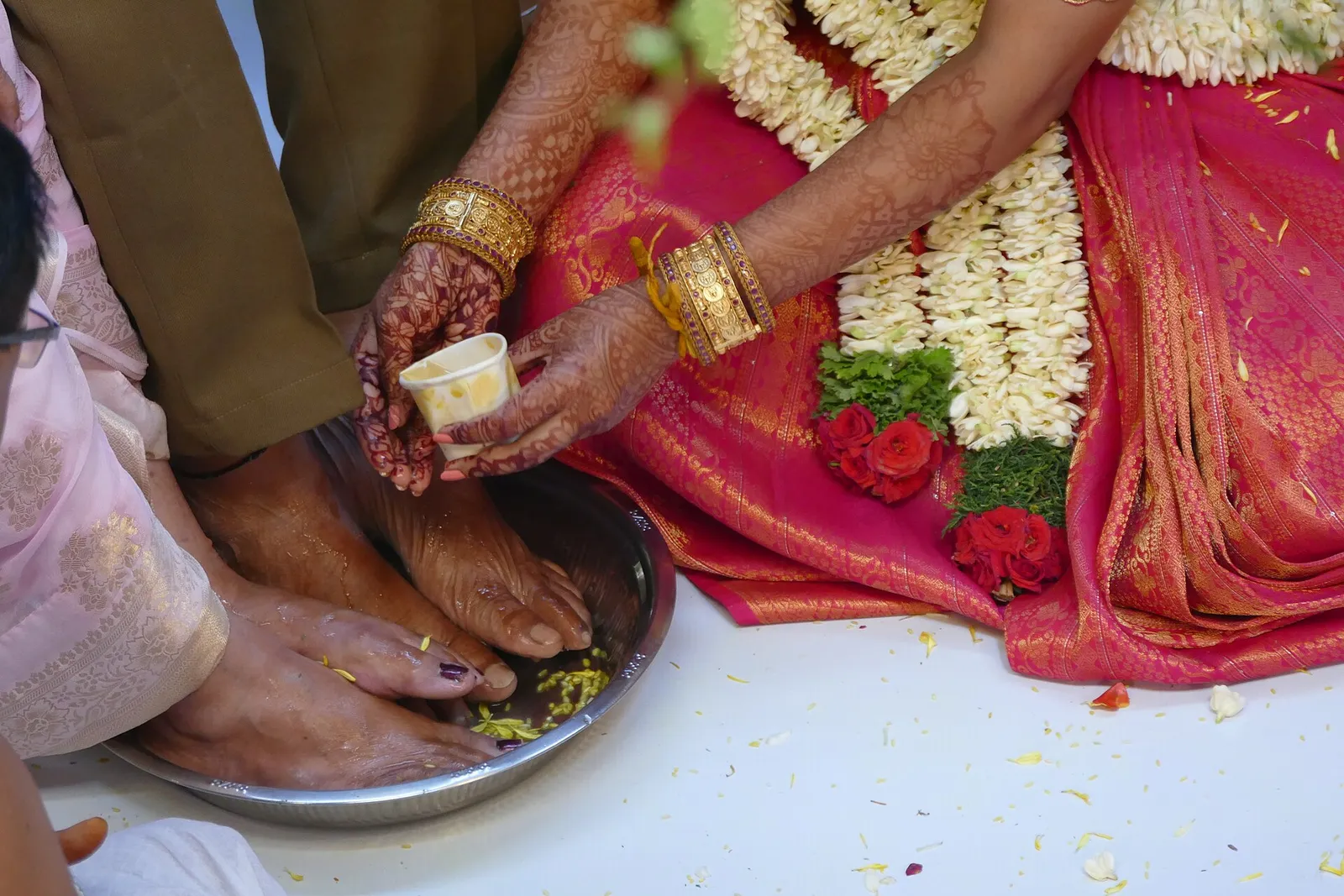
Before the main rites, feet are washed with water, milk and flowers — in many families the couple honour their parents this way, and the bride’s parents honour the groom. It is an act of respect, and a moment many parents remember more than any other.
The muhurtham
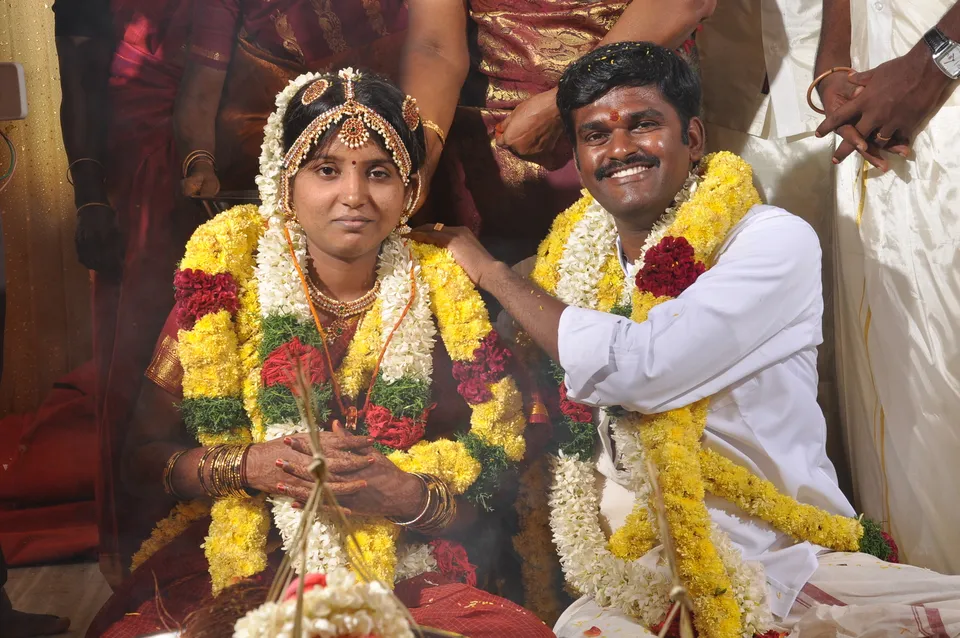
At the auspicious hour the nadaswaram and thavil rise to the getti melam — a fast, loud crescendo that drowns out everything else — as the groom ties the thali around the bride’s neck. Rice and petals rain down from everyone present, and the couple walk around the sacred fire together.
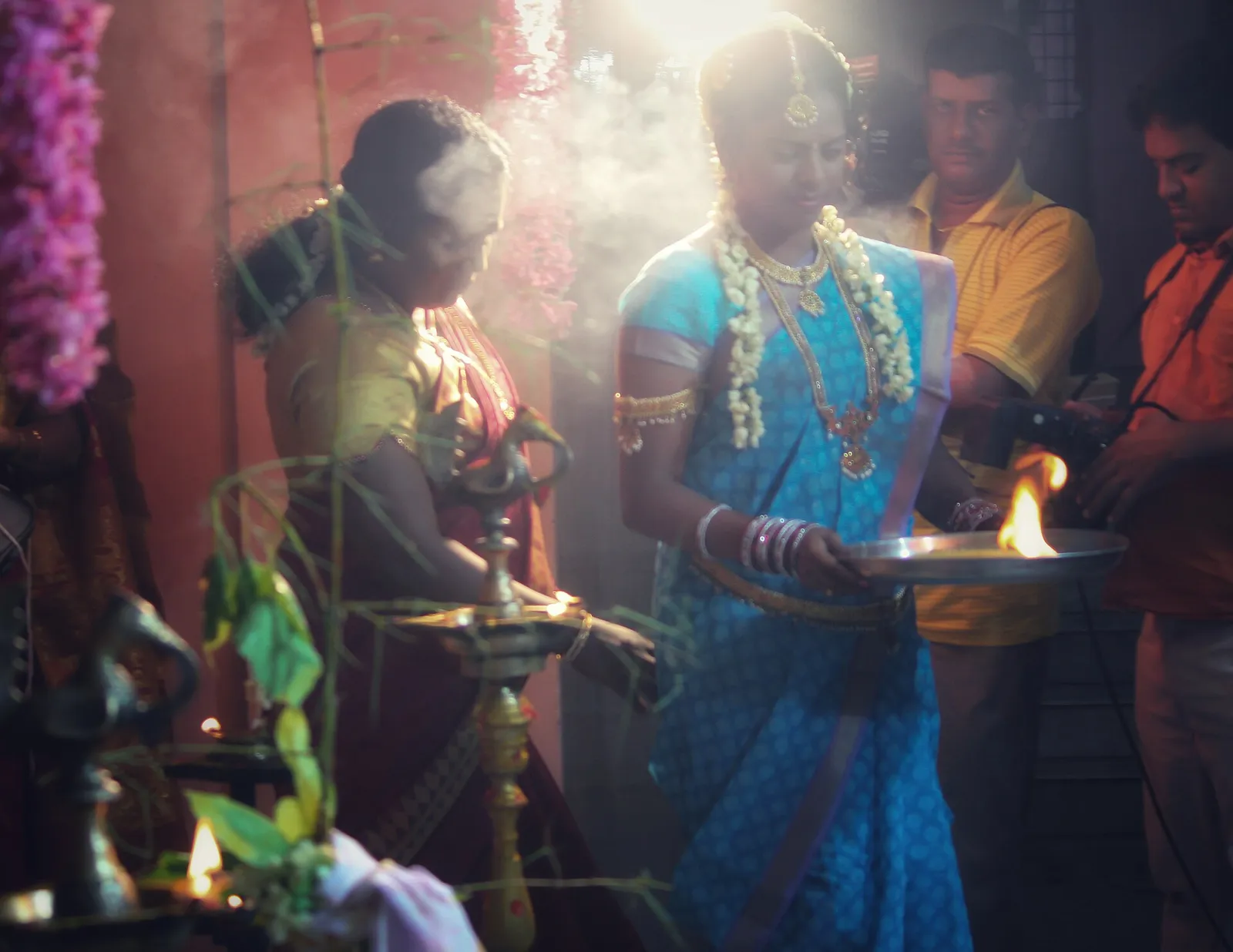
The thali is tied in a few seconds. The families have been preparing for it for months.
The feast
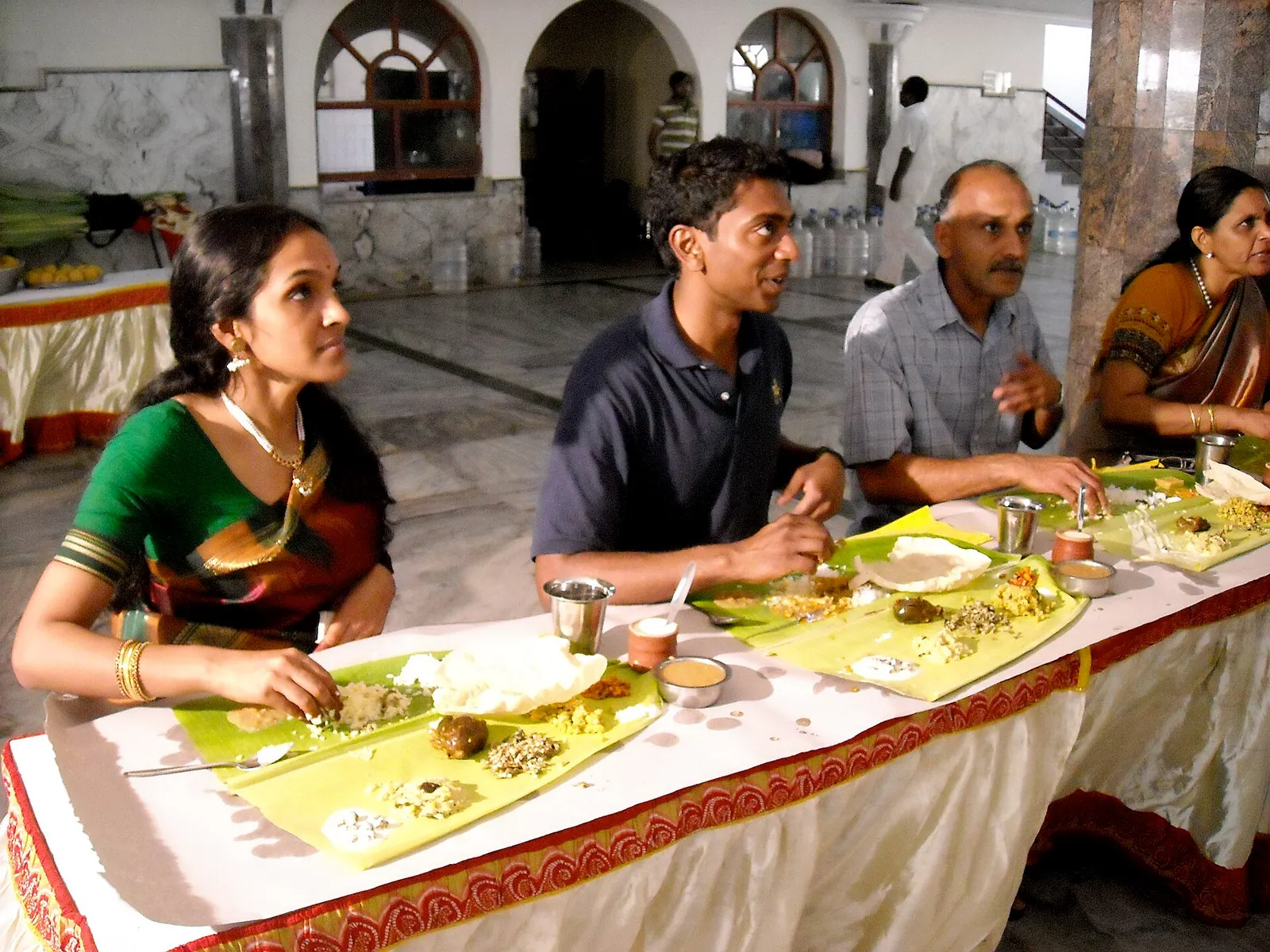
No Tamil wedding ends without the virundhu — rice, sambar, rasam, poriyal, payasam and more, served on banana leaves, often to hundreds of guests in turn. Folding your leaf towards you when you finish is a quiet thank-you to the hosts.
Every family does it a little differently, and that is the beauty of it. If you are beginning your own family’s search, meet verified families on Shakthi Matrimony.